Construction Management Software
Story
The construction industry faces numerous challenges, including labor shortages, budget overruns, project delays, and safety concerns. An international company developed a platform that offers end-to-end solutions, connecting everyone in construction and enabling access to the latest technology built on a secure and reliable infrastructure.
Some enterprise-level customers requested advanced data customization enhancements; at that moment, the product lacked the necessary flexibility to give company administrators control over how tools and forms worked on a specific project and situation. Thanks to on-site workshops with said customers, a multidisciplinary product team gained valuable insights, which gave our company a better understanding of the problem to solve.
My role
I was the leading UX designer on the team and collaborated with other designers focused on other solution spaces on the product platform. My team was dedicated to data customization and how different types of customers consumed it. I was responsible for doing research (generative and evaluative), socializing findings to key stakeholders, ensuring we aligned with existing artifacts and design system best practices, and working on the design discovery to achieve the first publicly available build of the new conditional logic fields.
I collaborated with a multidisciplinary team, including product managers, engineers (backend, frontend, and mobile), QA Testers, and data specialists. Sometimes, this involved proposing new design system updates and ensuring we introduced consistent, research-based patterns.
Challenges
1. Limited access to real customers.
Access to end-users was limited due to tight schedules, security protocols, and dispersed construction sites, which made it hard to validate ideas early and often, especially for features with specific workflows like conditional fields. As a result, assumptions risked being based on internal expectations rather than actual user behavior. Reliance on indirect feedback increased ambiguity in design choices, and timely insights from real users became a recurring bottleneck.
2. Poorly defined collaboration process with other solution spaces.
3. Mismanaged product roadmap.
4. Technical constraints and project complexity.
Solutions
1. Conducted moderated and unmoderated interviews.
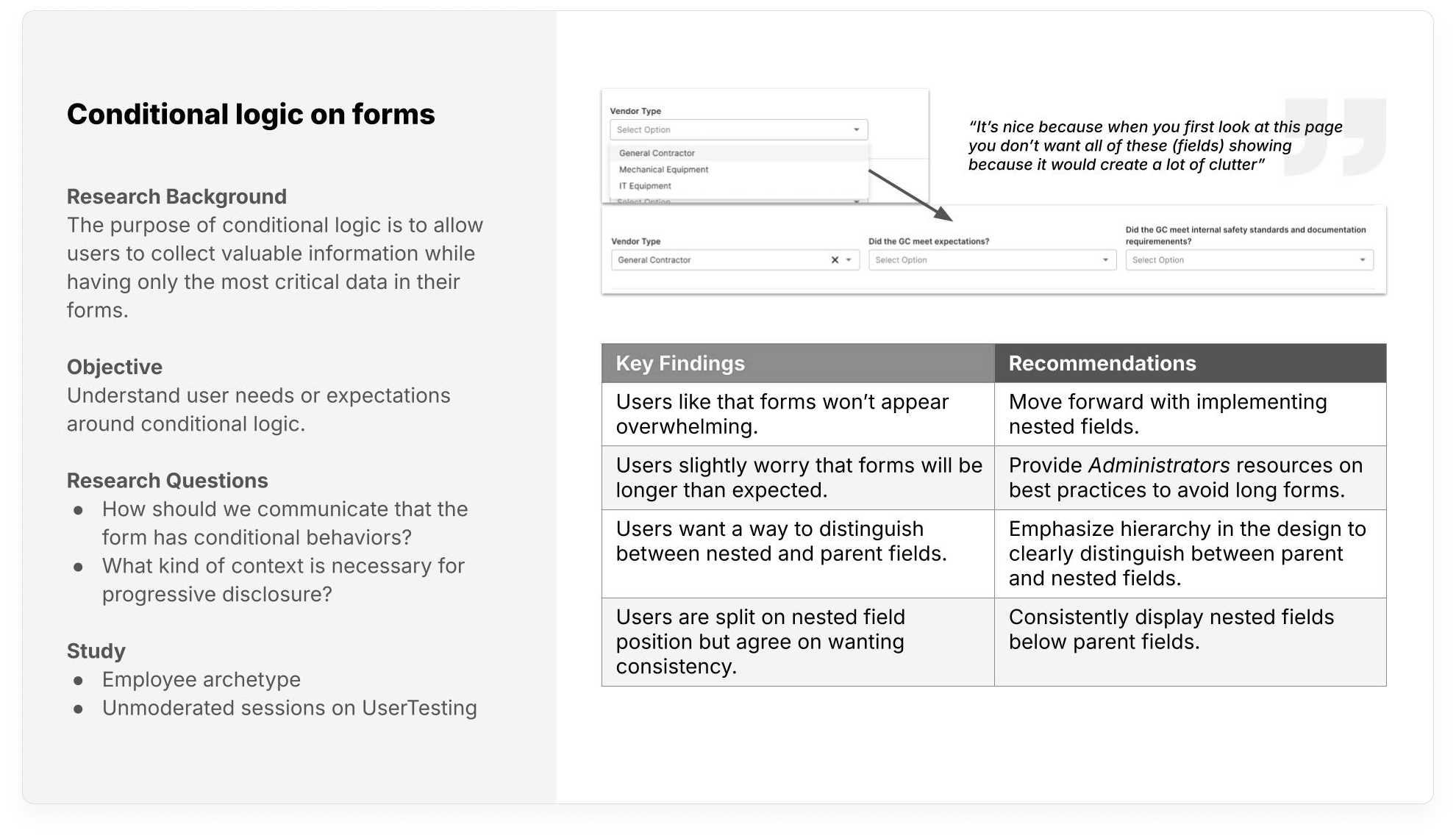
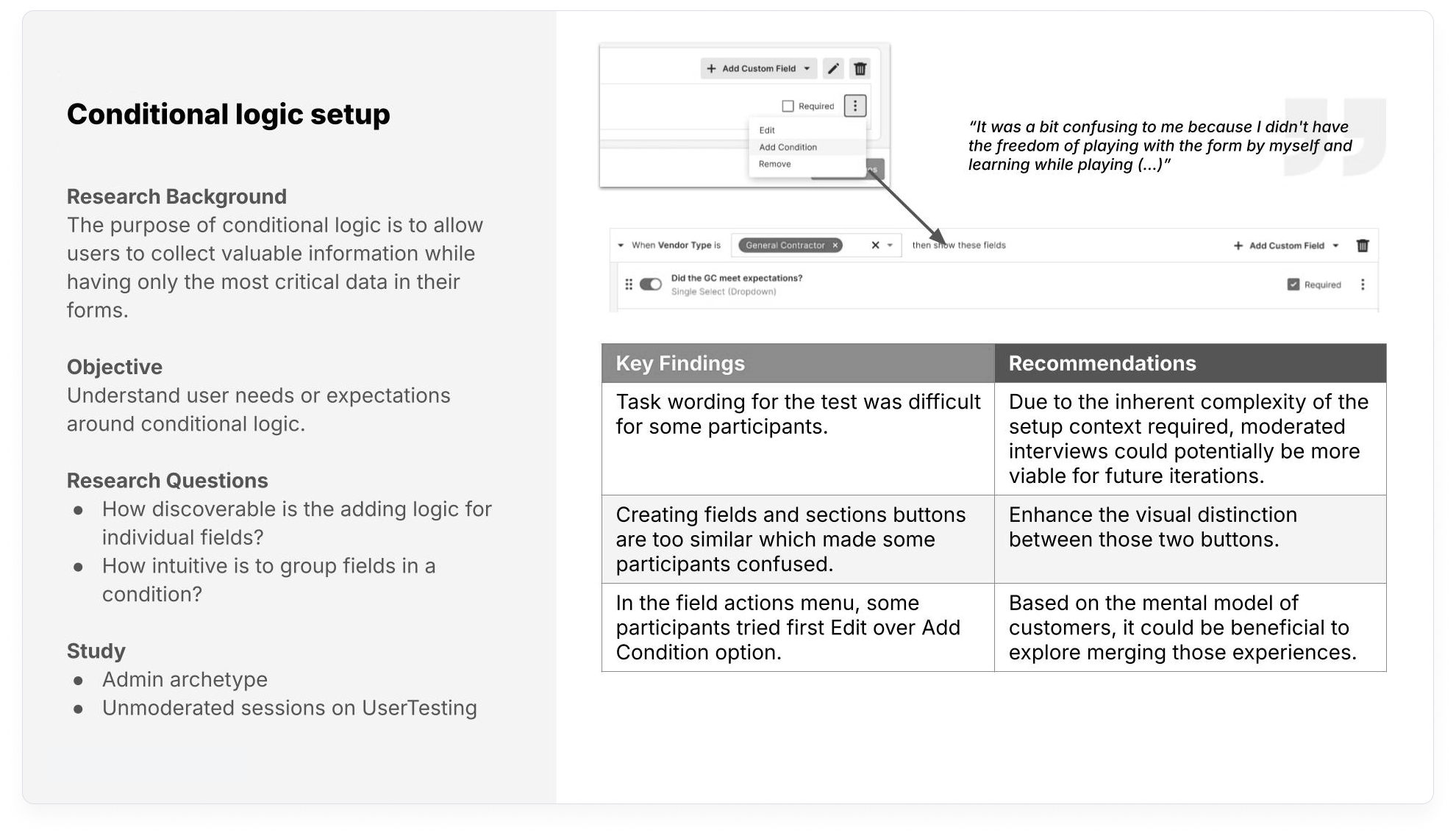
2. Documented recommendations about inconsistent patterns.
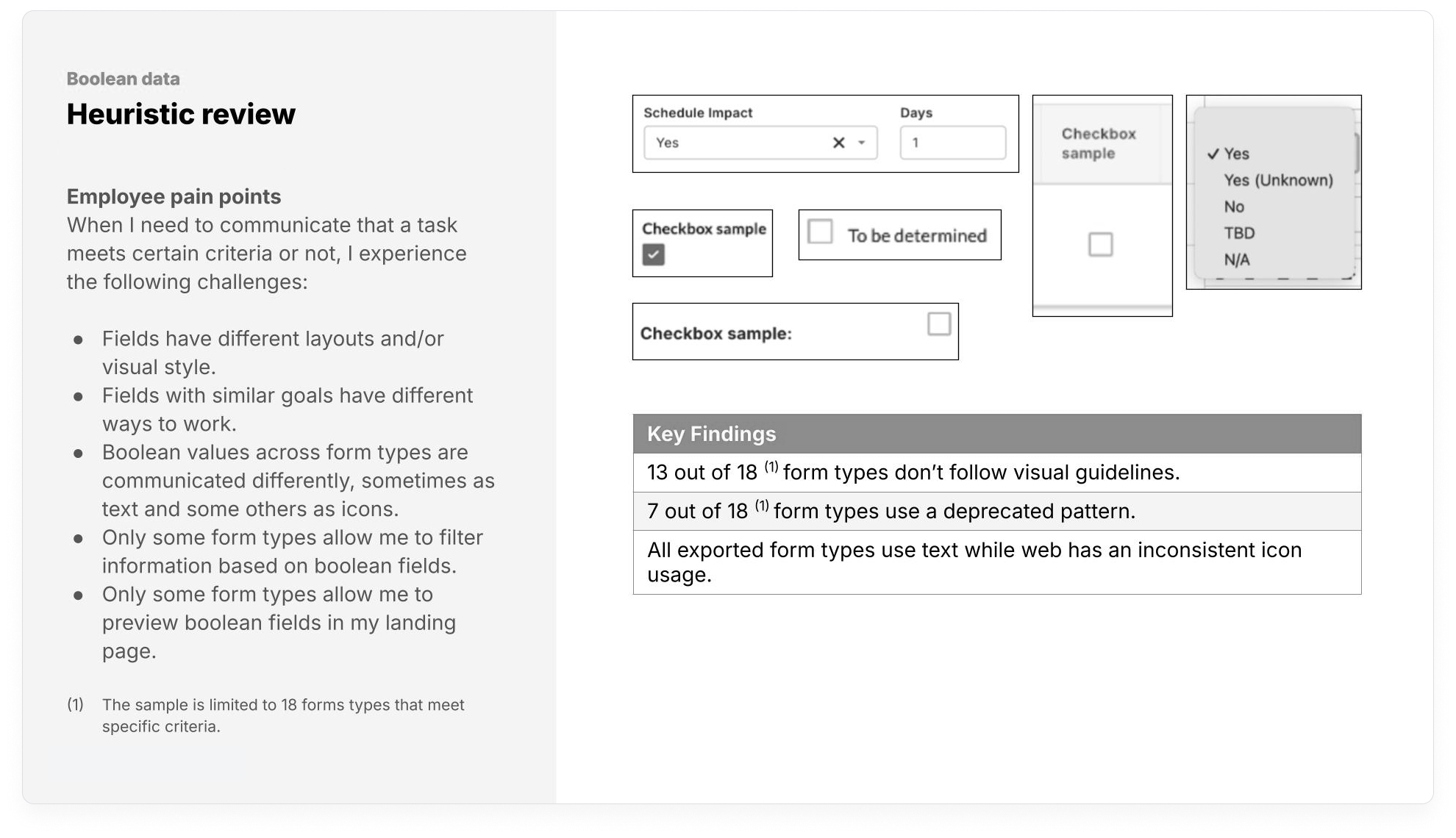
3. Proactive communication with other teammates and stakeholders.
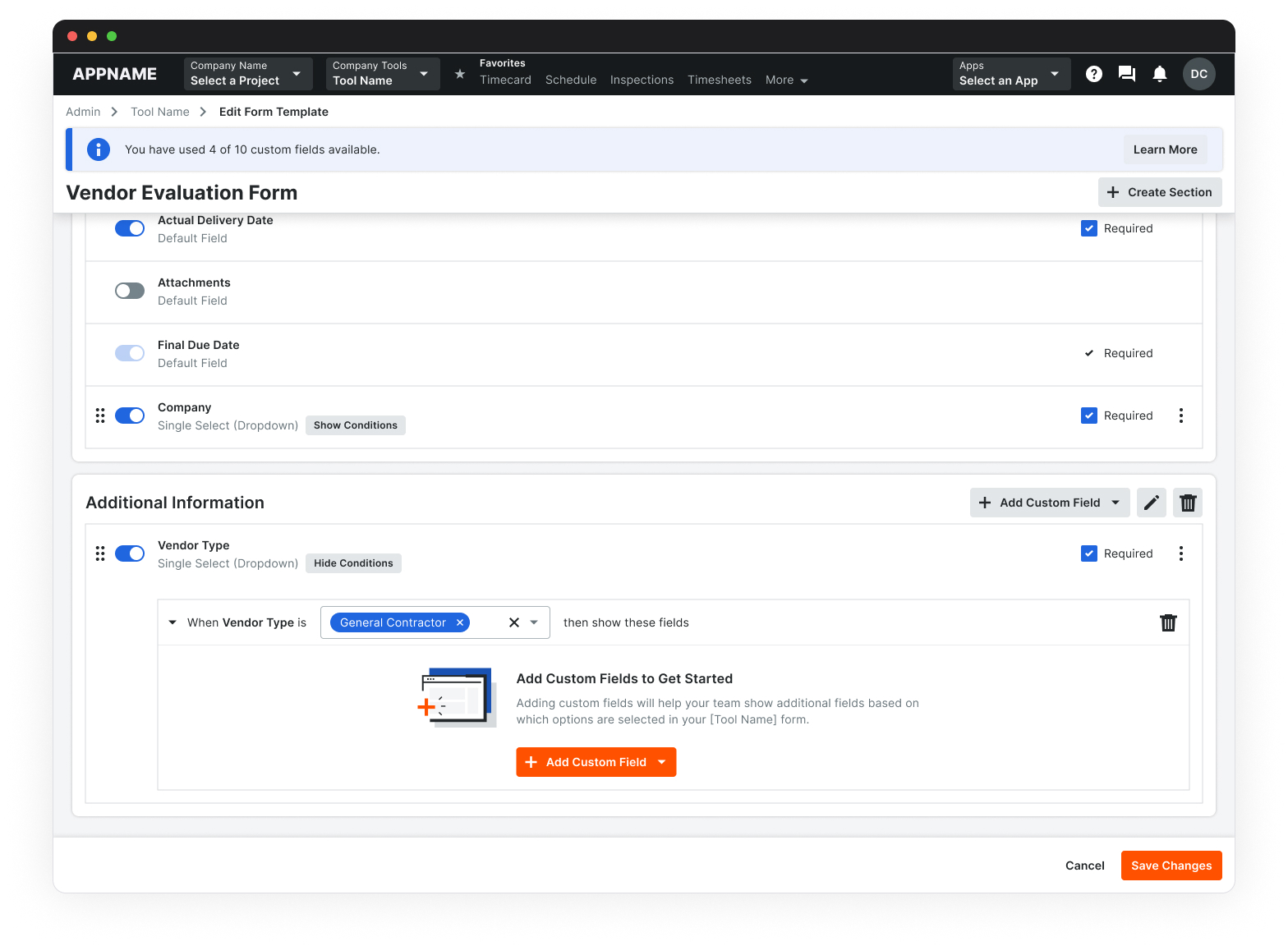
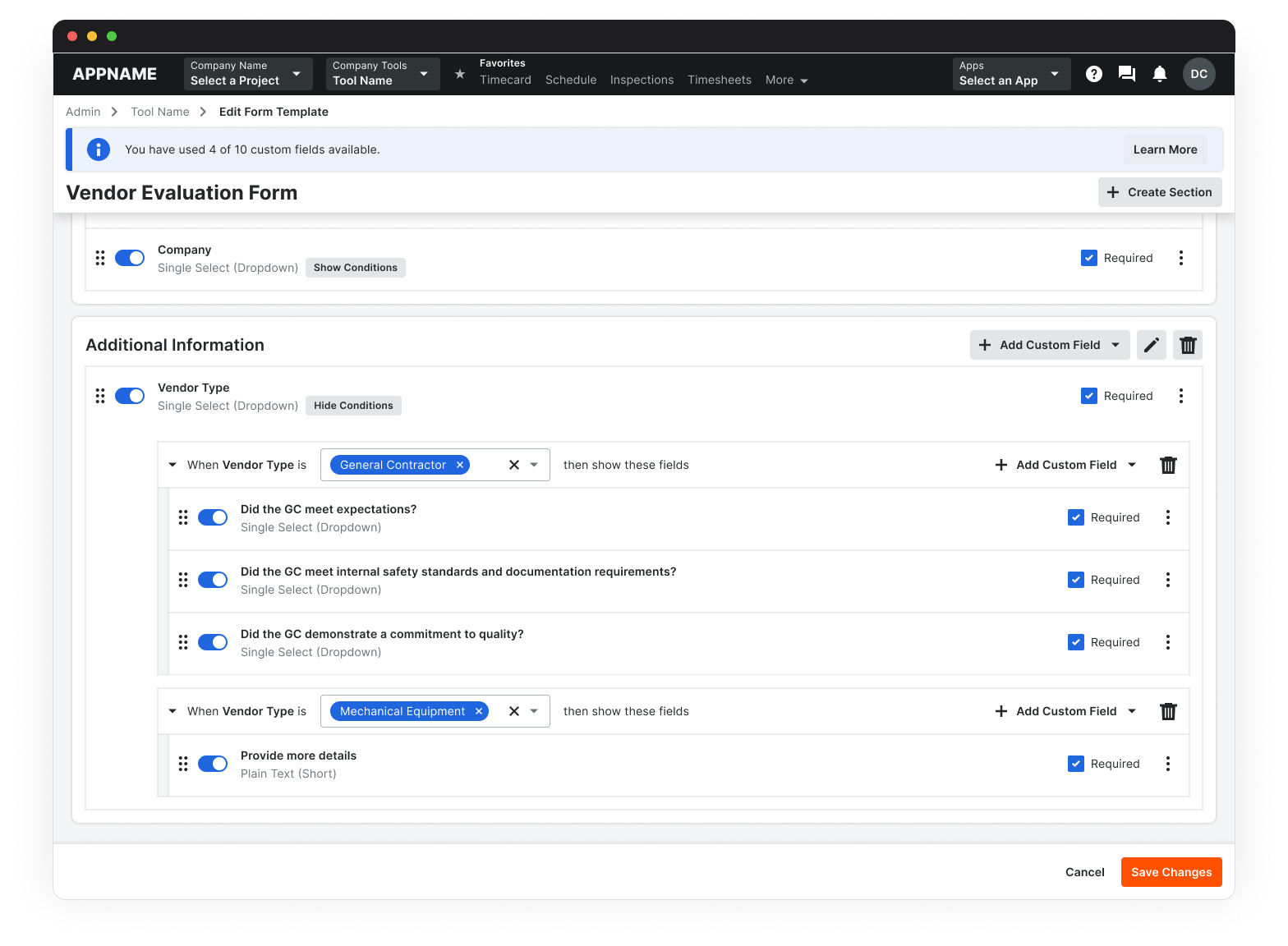
4. Design discovery of conditional logic features, along with other UX improvements.
As an Employee, I need to understand any custom information and its purpose so I can successfully complete my task.
- Easily find information to do my job
- Maximize time spent on core responsibilities
- Minimize time spent filling out forms
- Prevent me from making mistakes
“Just tell me what I’m working on and where I need to be.”
Focus:
- Receiving assignment details
- Understanding scope, location, and expectations
Needs:
- Quick access to project information
- Clear task ownership and priorities
- No unnecessary setup or configuration
“I want to get started without having to figure things out on my own.”
Focus:
- Learning how to use the required tools
- Understanding what needs to be reported and when
Needs:
- Simple, guided onboarding
- Clear instructions and examples
- Minimal training time
“I need the software to support my work, not slow me down.”
Focus:
- Performing daily tasks on site
- Using the software to document work, issues, or progress
Needs:
- Easy access to relevant information
- Fast, mobile-friendly data entry
- Guardrails that prevent mistakes or missing steps
“I just want to close things out and move on to the next job.”
Focus:
- Final submissions or confirmations
- Transitioning off the project smoothly
Needs:
- Clear indication of what’s complete
- Minimal end-of-project paperwork
- Confidence, nothing was missed
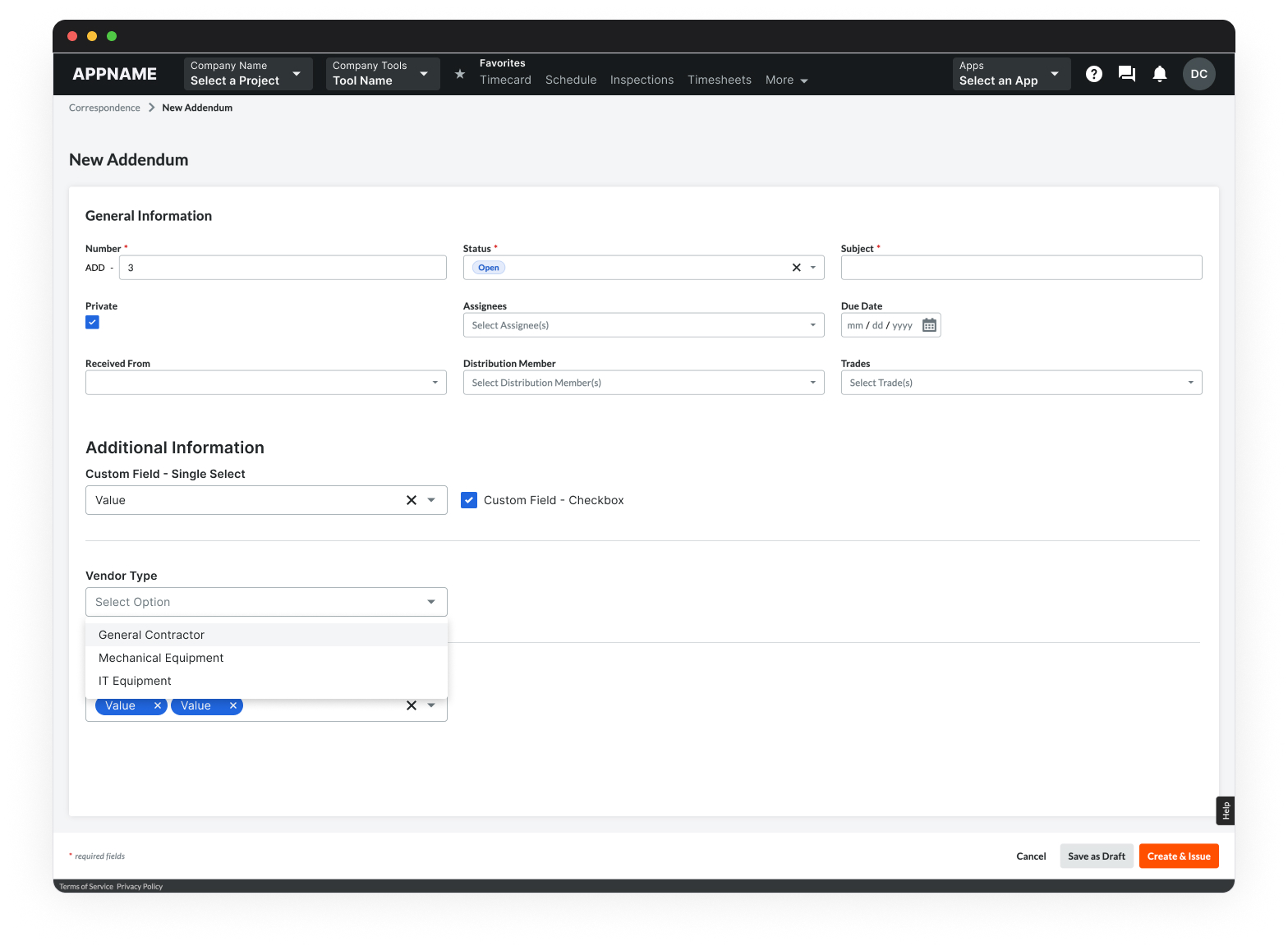
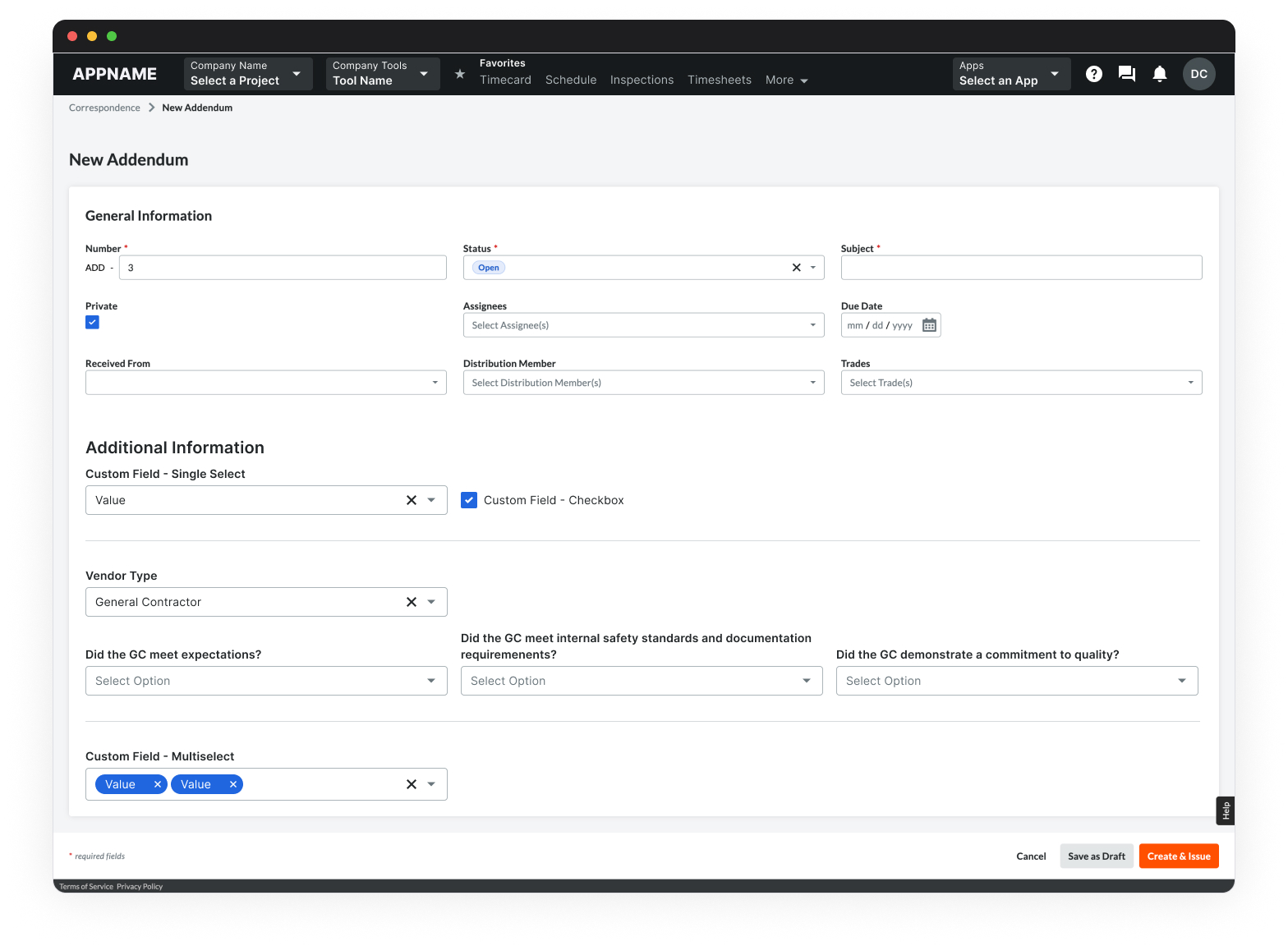
As an Admin, I need to be able to customize fields across the Construction Software to change how its options condition other fields’ values or the layout of any tool item form.
- Standardize data collection for improved data quality
- Comply w/internal standard operating procedures (SOPs)
- Comply with legal contracts and agreements
- Comply with local laws and regulations
“I need to make sure this project starts with the right structure from day one.”
Focus:
- Preparing data foundations for a new construction project
- Aligning tools with internal standard operating procedures
Needs:
- Consistent data structure
- Clear ownership and accountability
- Fast setup without rework
“I can’t afford mistakes. Everything must meet legal and contractual requirements.”
Focus:
- Ensuring alignment with internal SOPs
- Meeting legal contracts and agreements
- Complying with local laws and regulations
Needs:
- Confidence that required fields and workflows are enforced
- Reduced risk of missing mandatory information
- Audit ready data collection
“The forms should match how our teams actually work in the field.”
Focus:
- Customizing forms and workflows by trade, project type, or tool
Needs:
- Flexible form builders
- Standardized templates with controlled customization
- Improved data quality through structured inputs
“Requirements change, so updates need to be fast and non-disruptive.”
Focus:
- Adjusting forms or rules mid-project
- Responding to regulatory or contract changes
Needs:
- Real-time updates without breaking existing data
- Version control and visibility into changes
- Minimal disruption for field teams
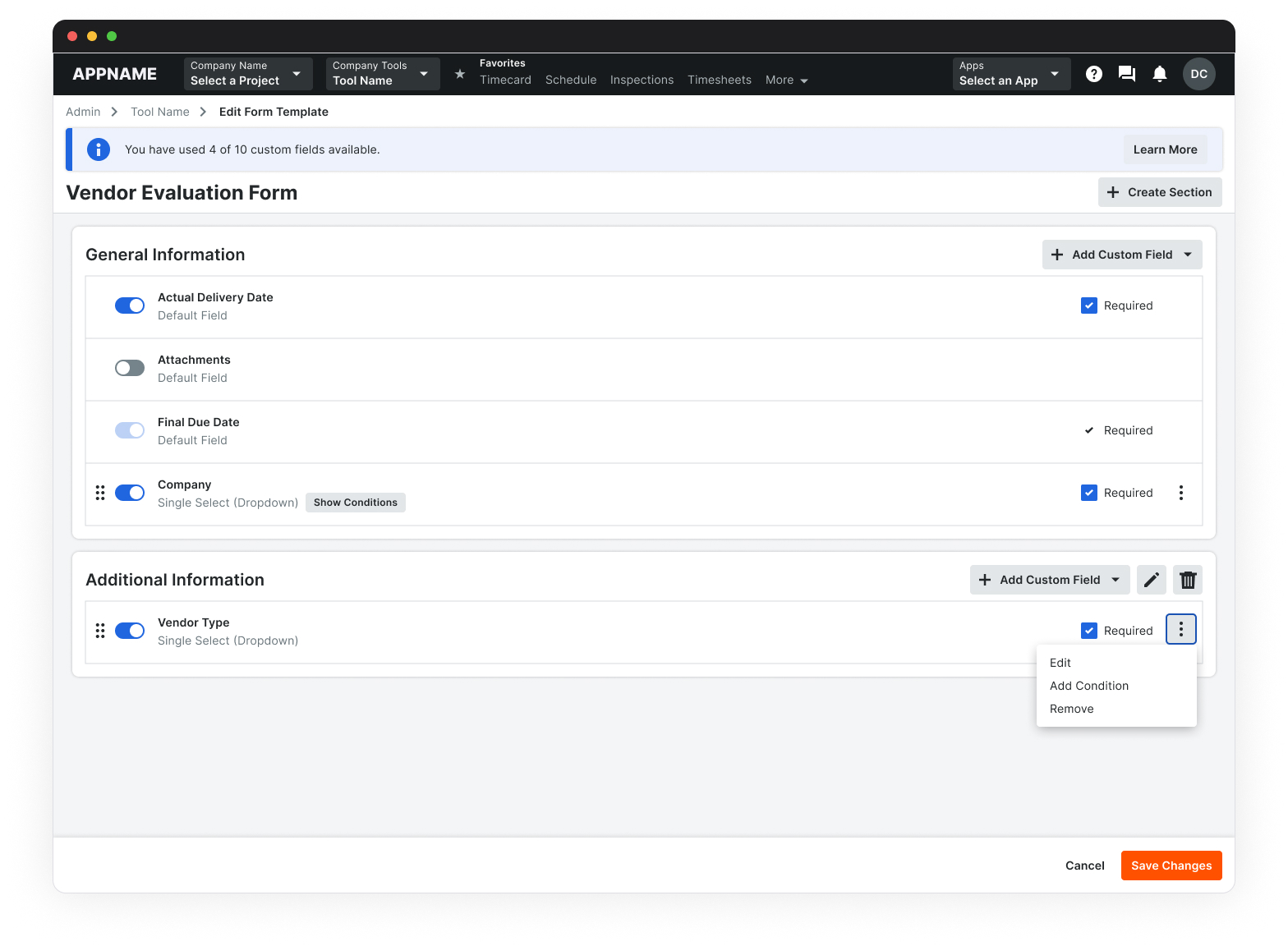
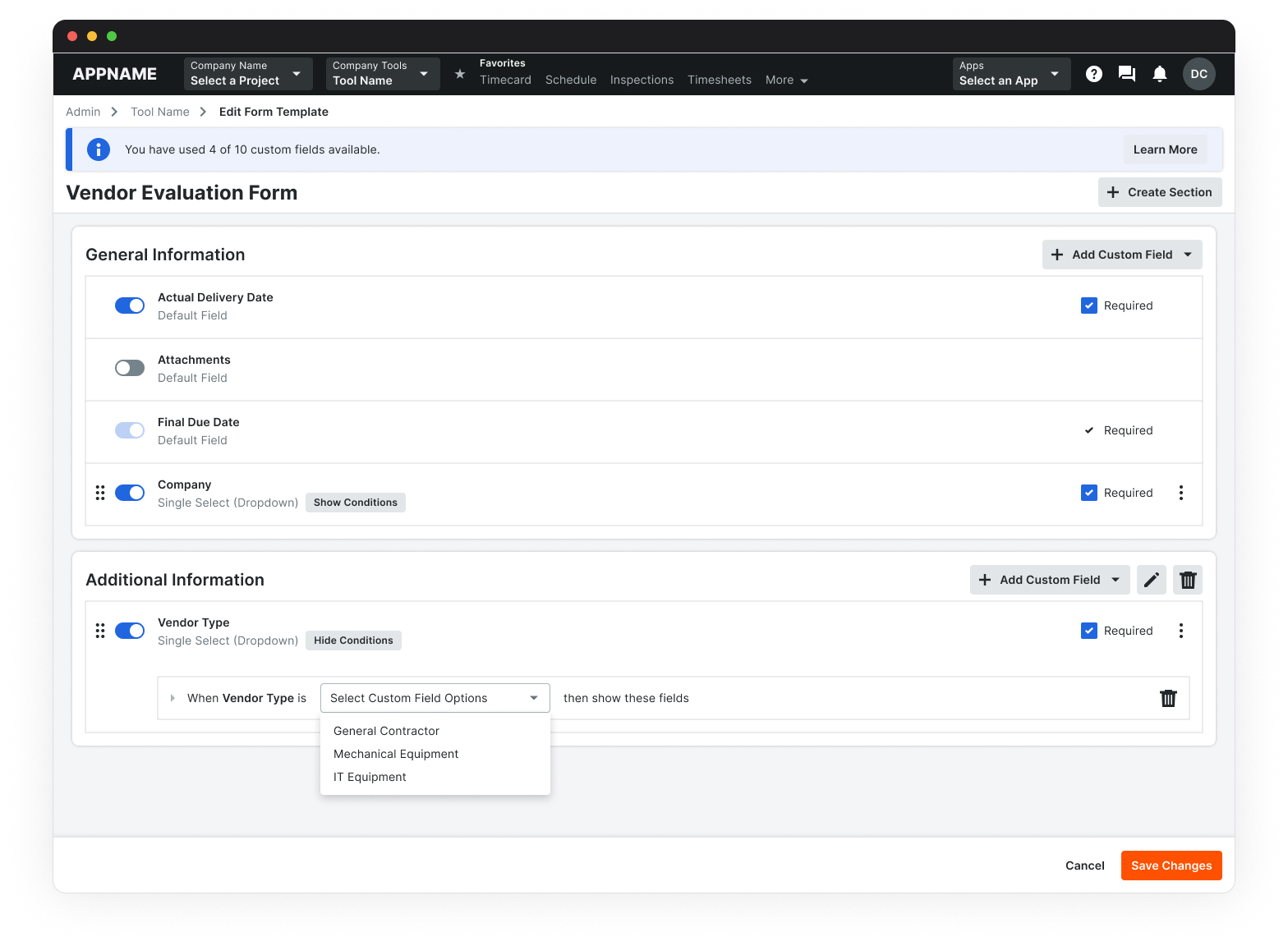
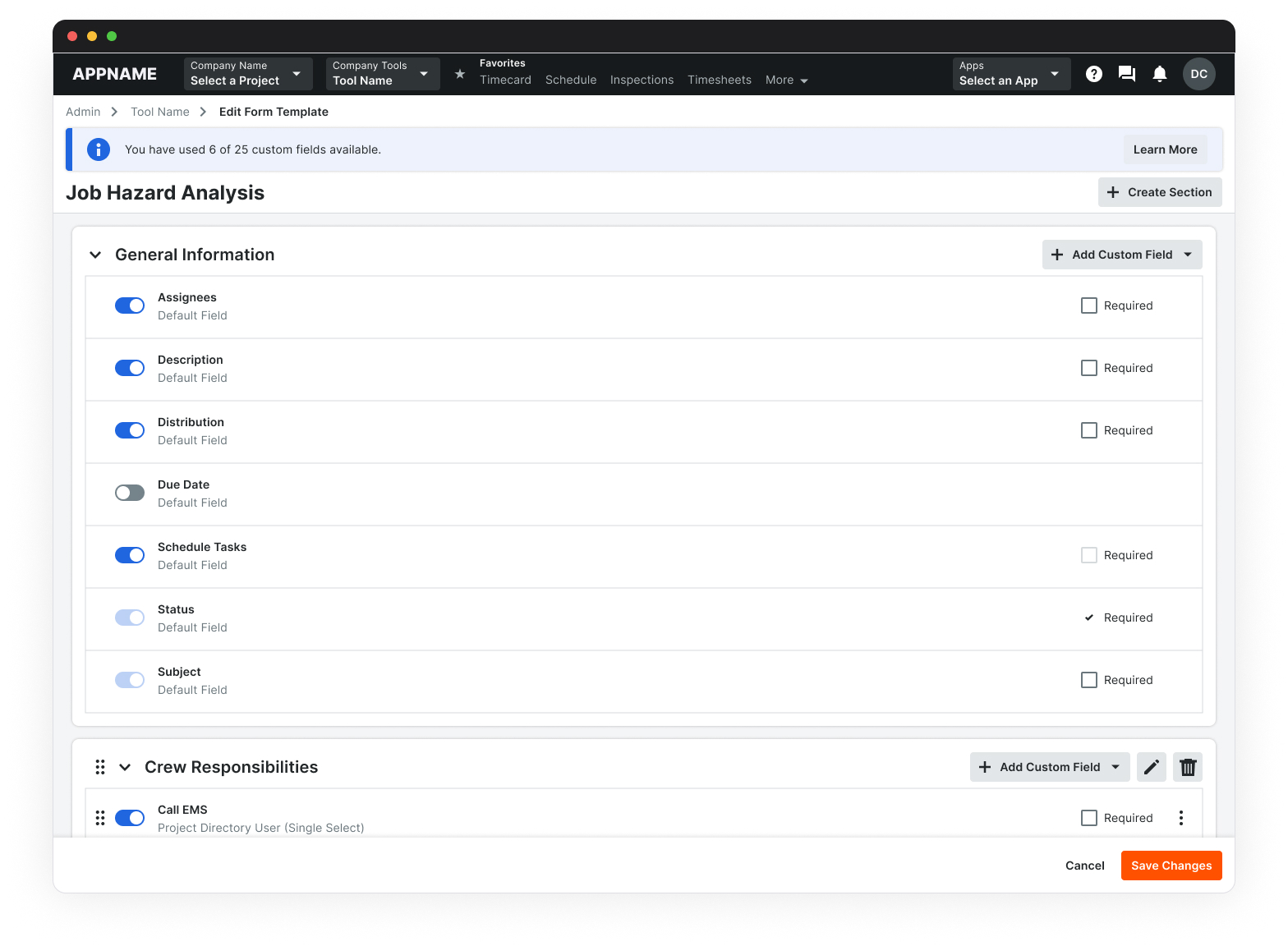
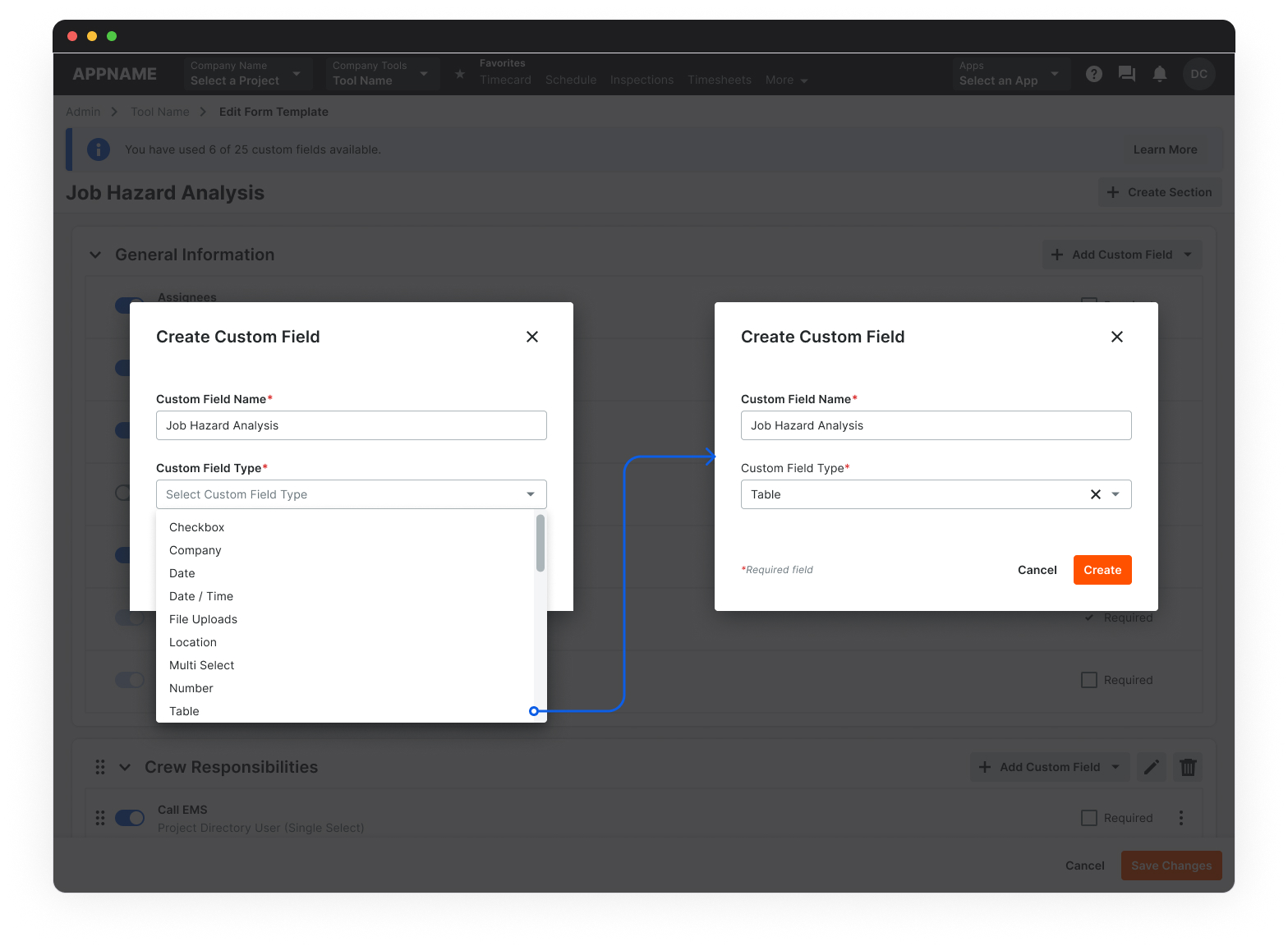
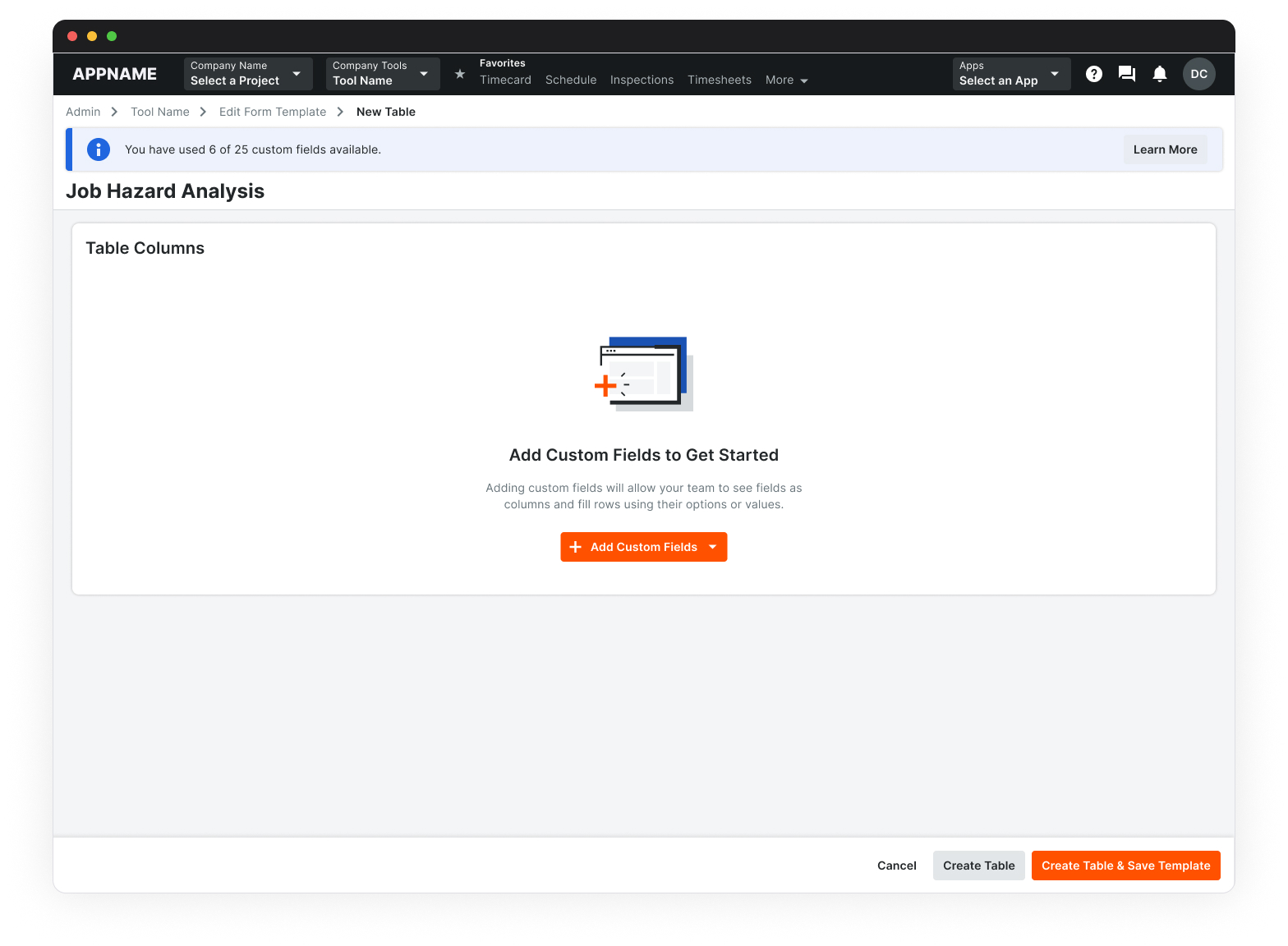
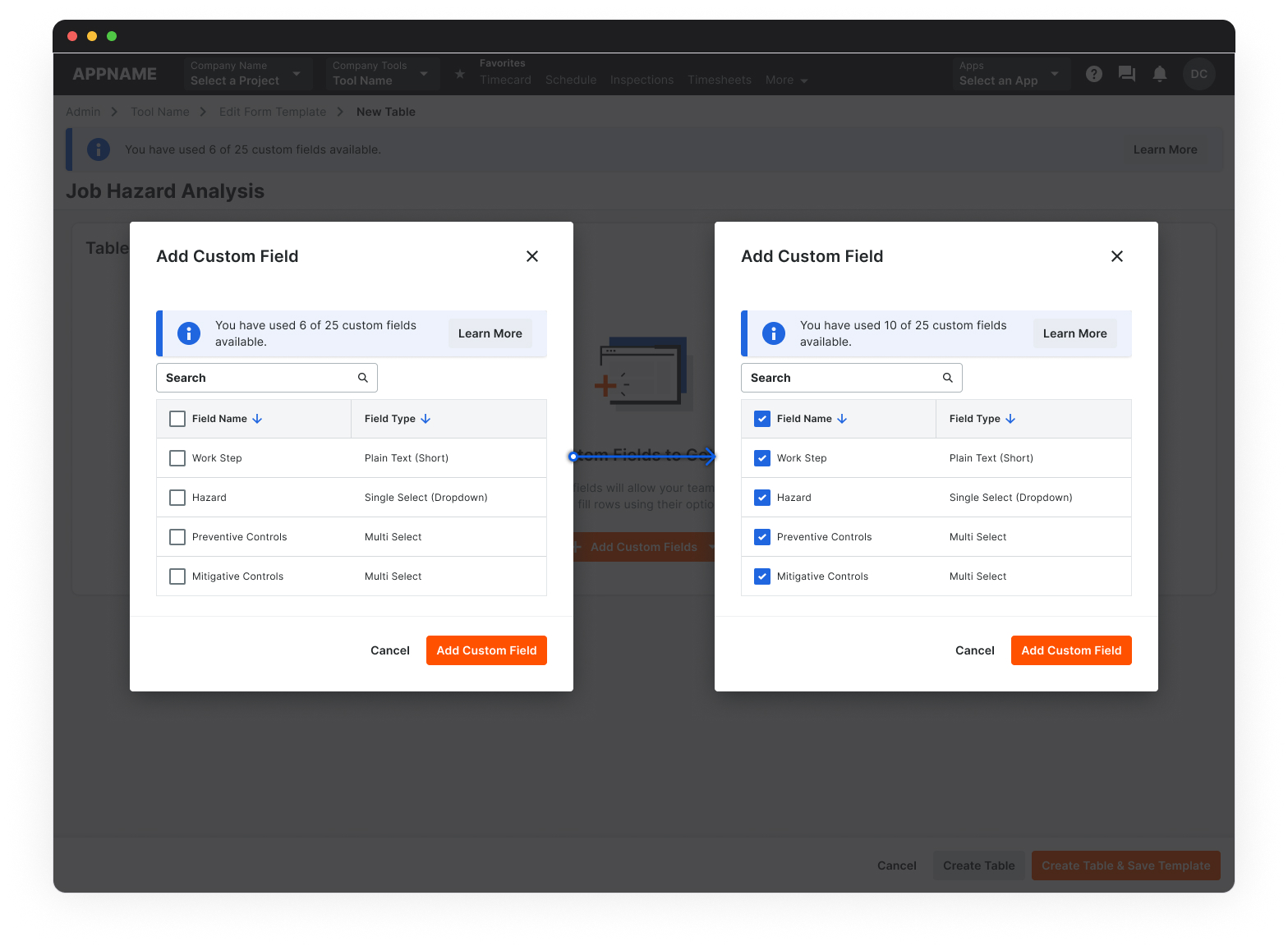
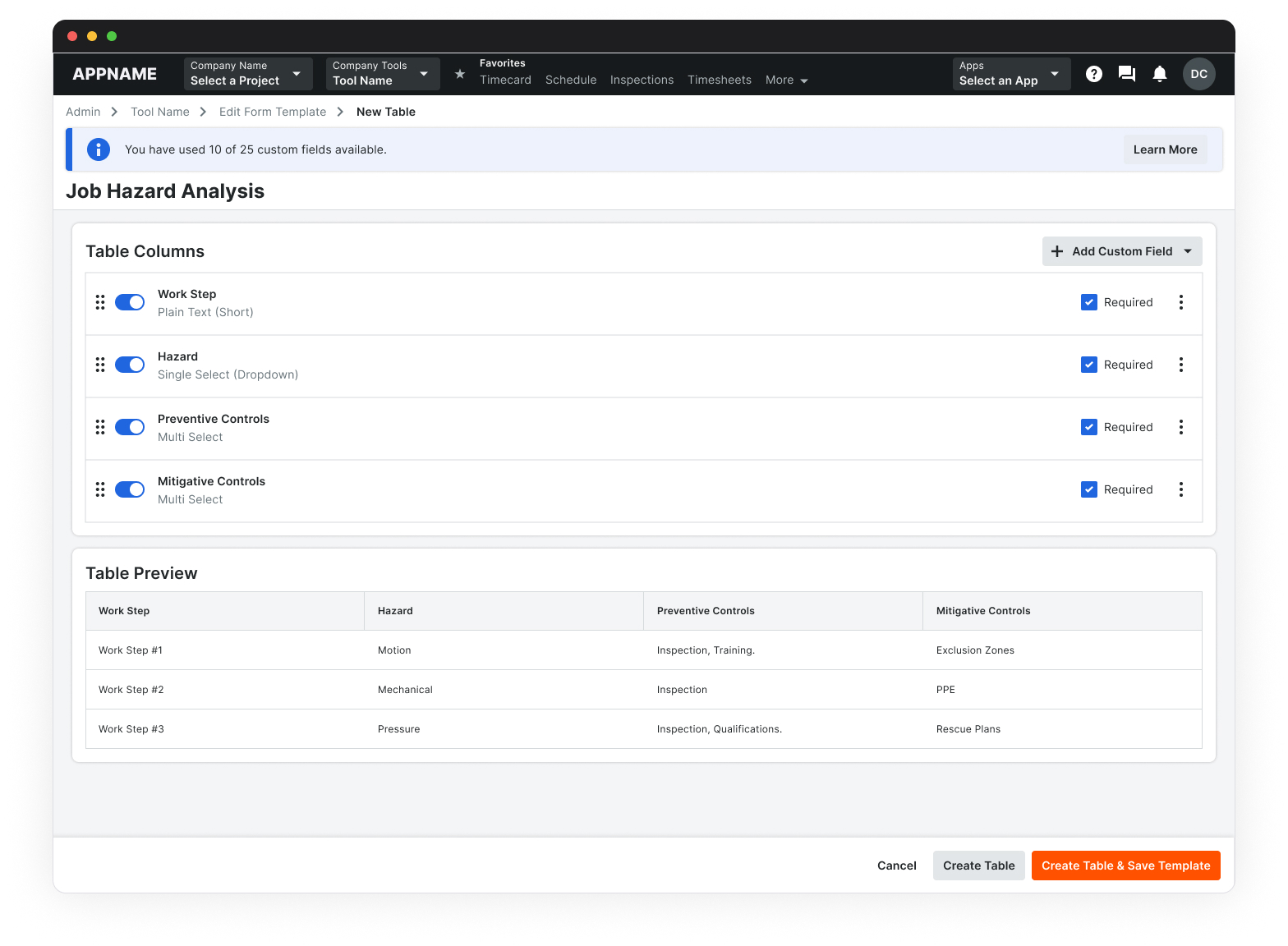
5. Proposed hackathon project to innovate how signature and table components could be used in safety forms.
Outcomes
- Won 1st place in the 2024 hackathon, which allowed the team to get investment in that initiative.
- Team stakeholders had a solid understanding of the UX direction for any product update.
- Got documentation and alignment about some inconsistent patterns across the solution space.
- Released to enterprise customers the conditional fields functionality (Closed Beta, then General Availability).